Reduce and stabilise energy costs
For many sites, switching from gas-fired steam to electricity makes clear financial sense. The challenge is usually not the technology, it is designing the right system and building a business case that accounts for all the savings available. The strongest cases combine low-cost electricity, flexible operation and the right hybrid design.
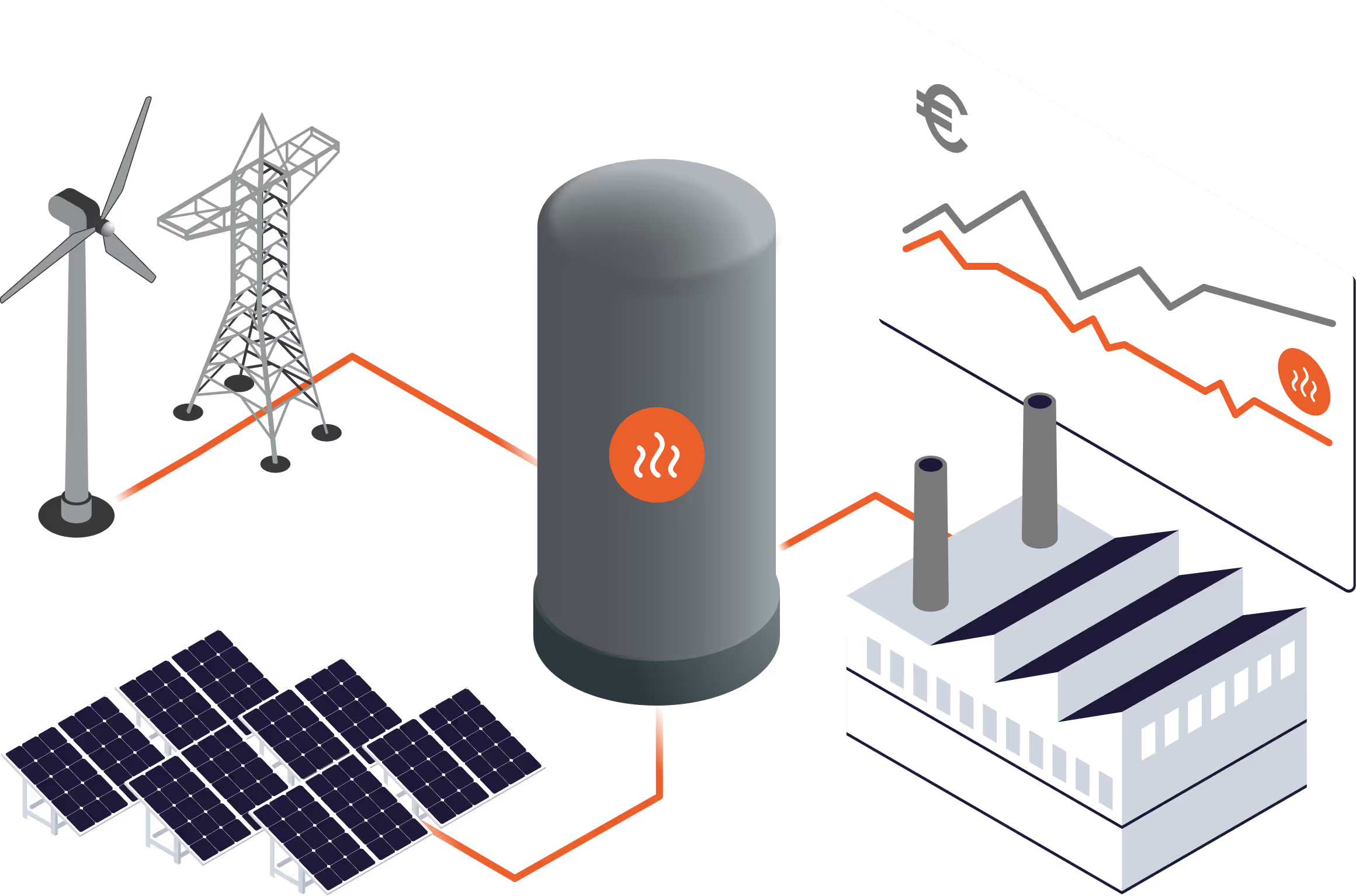


Buy power when it is cheapest,
and earn from being flexible
Because the Storage Boiler separates when you draw power from when you need steam, your electrical load can respond to price signals, shift to the cheapest hours, and earn grid-balancing revenues.
Smart controls charge automatically during the cheapest hours. Fast charging captures even short low-price windows.
The electrical load can ramp in seconds without interrupting heat supply. It connects to optimisation platforms to capture grid-balancing payments automatically.
We monitor site load and charge within the site’s grid connection limit. This often avoids a grid upgrade, which can be slow and expensive.
Combine technologies for the best economics
The strongest business cases rarely come from one technology alone. We size each part of the system for the share of demand it serves most economically.
Especially powerful in a retrofit. The Storage Boiler takes the load it serves most cheaply while the existing gas boiler covers the rest, giving a faster payback than full replacement.
Important for full electrification. Heat pumps cover lower temperatures and continuous duties efficiently. The Storage Boiler handles higher temperatures and demand peaks.
Where a site can accommodate a large solar array, the Storage Boiler strengthens the business case by absorbing surplus generation as heat rather than exporting electricity to the grid.
Account for all sources of savings
The grid and hybrid savings above are only part of the picture. Three further factors consistently improve the numbers.
Cutting combustion reduces exposure to carbon costs, whether that is the EU ETS, the forthcoming ETS2, or national CO₂ taxes.
Gas boilers are 10-30% less efficient in operation than a Storage Boiler, mainly due to flue losses and short cycling. Storage Boilers convert almost all energy to heat, while vacuum insulation prevents losses.
Shifting load to flexible, lower-cost electricity reduces exposure to fossil fuel price spikes and makes future energy costs more predictable.
We do the analysis, you get the options
Steam demand, electrical demand, and your existing setup. We are used to working with sites to estimate sensibly across any gaps in the data.
We simulate how a Storage Boiler would respond to real energy price signals across 8,760 hours, then test different specifications to optimise. That includes the hybrid balance between Storage Boiler, gas, and heat pumps.
You receive a set of options showing the trade-offs in capex, opex, and emissions reduction, so you can choose the case that fits your priorities.
Let us crunch the numbers for your site
Tell us about your steam load and we will model the business case, including the right hybrid mix and the savings available to you.


